Six Petal Floral: A Thoughtful Embroidery Review for Small Business Brands
First Impression: Elegant, Earthy, and Intentionally Balanced
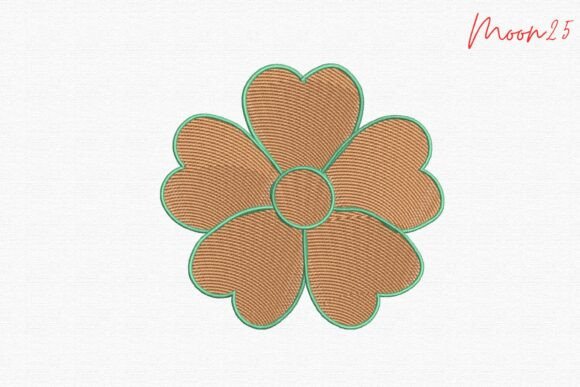
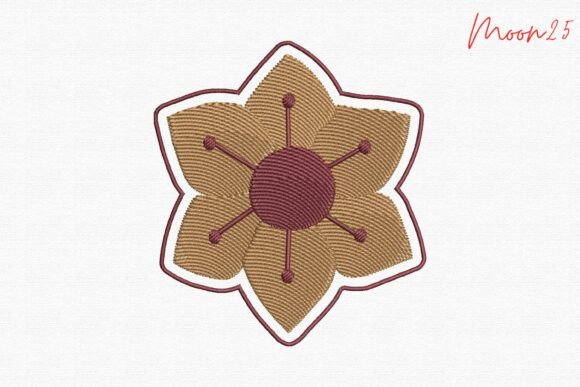
As an embroidery designer who’s digitized and stitched hundreds of floral motifs for small businesses—from neighborhood bakeries to indie florists—I immediately recognize the quiet confidence in Six Petal Floral. It doesn’t shout. It invites. The warm, earthy color palette suggests approachability and authenticity—ideal for brands that value craftsmanship over flash. “Elegant” isn’t just marketing language here; it’s built into the radiating stitch structure and petal shaping. This isn’t a cartoon bloom or a stiff botanical illustration. It’s a machine embroidery design that breathes like hand-drawn linework but holds up under commercial stitching. For a small business seeking brand identity rooted in warmth and sincerity—think handmade soap labels, café aprons, or boutique tote bags—Six Petal Floral lands as both timeless and intentional.
Where It Shines in Real-World Merchandise
Six Petal Floral excels where subtlety and recognition matter most. As an embroidered patch on a denim jacket or canvas tote bag, its six-petal symmetry reads clearly at arm’s length—even from across a farmers’ market stall. On staff uniforms or aprons, it works beautifully as a chest accent: large enough to feel considered, small enough to avoid visual clutter. I’ve used similar single-flower designs for local pet brands (stitched onto bandanas and collar tags) and artisanal tea shops (embroidered onto linen tea towel hems), and Six Petal Floral fits that same thoughtful niche.
For cap embroidery? It performs well on structured front panels—especially when sized between 2.5"–3.5"—thanks to its balanced center-to-petal ratio. Unlike tightly packed floral clusters, this design avoids overcrowding at smaller scales. As a sleeve detail on work shirts or a subtle mark on product packaging accents (like fabric-wrapped gift boxes), it reinforces brand cohesion without demanding attention. And because it belongs to the Single Flowers Plants category—not a complex bouquet or vine—it scales cleanly across digital embroidery file uses, printable mockups, and multi-product rollouts.
Where to Proceed with Care
Every strong embroidery file has boundaries—and Six Petal Floral is no exception. Its “detailed stitching radiating from the center” means higher stitch density near the core. That’s gorgeous at 3"–4", but at sub-1.75" patch sizes (like on keychains or mini luggage tags), fine petal definition may soften or blur, especially on textured fabric like heavy twill or unbleached canvas. Similarly, curved surfaces—cap bills, rounded tote handles, or knit beanie fronts—require careful hooping and stabilizer selection to prevent distortion of those graceful petal outlines.
Dark uniforms? Test thread color contrast rigorously. Earthy tones can recede on charcoal or navy unless paired with slightly brighter ecru, oat, or burnt sienna threads—not just literal matches from the description. Also, avoid pairing Six Petal Floral with tiny lettering directly adjacent; its organic shape needs breathing room. And if your small business merch includes high-wash items (like restaurant aprons or daycare staff gear), confirm the design’s underlay and satin coverage support durability—don’t assume “detailed stitching” equals wash-fast density.
How It Strengthens Brand Identity—Beyond Aesthetics
Small business owners often underestimate how much a single, well-chosen embroidery motif shapes customer perception. Six Petal Floral signals care—not just in execution, but in intention. Its harmony and balance subconsciously communicate reliability and attention to detail. When stitched onto a bakery’s flour-dusted apron or a florist’s reusable tote, it tells customers: *This isn’t mass-produced. This is made with respect—for craft, for nature, for you.* That builds trust faster than any tagline.
Visually, it supports consistency across touchpoints: a patch on a tote, a cap logo, and a sleeve detail all feel like parts of one story—not separate assets fighting for attention. For Etsy sellers and handmade brands, that unity elevates perceived product value. Buyers don’t just see a flower—they see a cohesive brand world. And because it’s a clean Embroidery design (not a vector or print), it avoids the “flat” look of screen-printed merch, reinforcing authenticity in a saturated marketplace.
Practical Designer Notes Before You Stitch
Before sending Six Petal Floral to production—or presenting it to a client—follow these steps:
- Test it in black and white first: Does the petal separation hold? Are center details legible without color cues?
- Check performance at your smallest intended patch size: Resize digitally and zoom to 200%—look for thread crowding or lost definition.
- Review thread color contrast on your actual fabric swatches—not just on-screen previews.
- Inspect spacing between petals and center elements: Tight gaps risk skipped stitches on low-tension machines.
- Confirm hoop size compatibility: Does it fit comfortably within your standard embroidery frame without re-hooping mid-stitch?
- Test on real fabric with your preferred stabilizer: A soft tear-away may not support radiating satin stitches on lightweight linen.
- Create a printable mockup for client approval: Show it on a cap, tote, and apron—not just a white square.
- Compare it beside other design assets: Does it sit comfortably next to your wordmark or icon system?
- Verify commercial licensing: Ensure your digital embroidery file permits use on products sold to end customers.
Remember: Six Petal Floral isn’t just decoration. It’s a functional piece of your brand infrastructure—worn, washed, gifted, and seen. Treat it with the same diligence you’d give your logo or packaging. When digitized and applied with intention, it becomes more than a flower. It becomes recognition. It becomes belonging. And for any small business building something real, that’s the highest stitch count of all.