Colorful Daisy: A Craft Fair-Ready Embroidery Design
First Impression: Cheerful, Fresh, and Instantly Recognizable
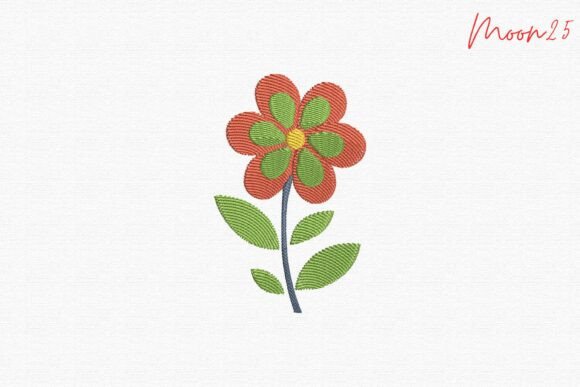
As an embroidery designer who’s prepped over 200 craft fair booths in the past decade, my first thought when I read “Colorful Daisy” wasn’t about stitch count—it was about booth traffic. This design lands with unmistakable energy: orange petals, green leaves, a bright yellow center, and a slender blue stem. It’s not rustic, not minimalist, not vintage—it’s joyful modern botanical. That matters immensely when shoppers walk past your table in under three seconds. Colorful Daisy feels like sunshine in thread: bold enough to catch eyes from six feet away, but soft enough to avoid visual fatigue. It fits seamlessly into the Single Flowers Plants category while standing apart from generic florals thanks to its intentional color story and clean silhouette.
Where Colorful Daisy Shines on Craft Fair Products
Not every embroidery design translates equally across product types—and that’s where real-world testing separates good files from great craft fair product assets. Here’s how Colorful Daisy performs:
- Tote bag design: Exceptional. Centered on a natural canvas or oat linen tote, it reads clearly at arm’s length—no squinting required. The blue stem adds vertical rhythm that balances the round bloom.
- Apron embroidery: Ideal for chest placement. The scale works beautifully above the pocket without overwhelming the fabric. Green and orange pop against denim, chambray, or cream cotton.
- Tea towel embroidery: Strong—but only on smooth, tightly woven cotton or linen blends. Avoid highly textured towels; the slender stem and petal edges may blur.
- Embroidered patch: Highly effective as a sew-on or iron-on. Its compact shape and high-contrast colors make it legible even at 2.5" wide—a sweet spot for market-goers browsing keychains, denim jackets, or backpacks.
- Caps and curved surfaces: Proceed with caution. The slender blue stem may distort unless digitized with curve compensation. Always test on scrap before committing to a full batch of embroidered caps.
- Fabric pouches & pillow covers: A standout. At 3–4" wide, Colorful Daisy anchors the front panel with personality and precision—no filler needed.
What Makes Colorful Daisy Sell—Beyond the Stitch
This isn’t just a machine embroidery design; it’s a small-shop storytelling tool. When customers see Colorful Daisy on a handmade product, they register freshness, care, and intention—not mass production. That perception lifts perceived value instantly. On Etsy listings, it photographs cleanly against neutral backdrops, and its color palette adapts well to both warm and cool-toned mockups. As a digital embroidery file, it’s highly repeatable: no tiny lettering, no micro-details that vanish at 1.75", and no overlapping fill areas that cause thread nesting. That means faster hooping, fewer restarts, and smoother batch production for commercial embroidery.
Careful-Use Notes Every Designer Should Check
Even joyful designs have limits—and overlooking them costs time, thread, and credibility at craft fairs. Before cutting fabric for your next run:
- Test on your exact fabric: Dense stitch areas (especially around the yellow center) can pucker on lightweight knits or stretchy blends. Run a sample on scrap first.
- Avoid dark fabric without contrast testing: Orange-on-black looks vibrant in theory—but if the thread isn’t matte or slightly heathered, it can appear flat. Always check thread brightness against your base fabric.
- Respect the stem: That slender blue line is charming—but too thin on heavy canvas or thick toweling. If using on market bags or aprons with stiff interfacing, confirm the digitizer built in adequate underlay.
- Watch hoop size & stabilizer pairing: This design performs best in a 4x4 hoop. Use medium-weight cutaway stabilizer for structured items (totes, pouches), and tear-away for tea towels and lightweight apparel. Skip fusible web alone—it won’t support the petal density.
Design Assets That Strengthen Your Booth & Brand
Colorful Daisy does more than decorate—it builds cohesion. Used consistently across your handmade product line (e.g., matching tea towel + pouch + patch set), it becomes a subtle brand signature. That consistency signals professionalism to buyers scanning multiple booths. In person, it draws attention without shouting; online, it supports strong printable mockup variety—swap background fabrics, rotate orientation, layer with simple text (“Garden Goodness”, “Pick-Me-Up”) for versatile listing visuals. For Etsy sellers, it’s a low-risk, high-appeal addition: floral lovers search “daisy embroidery” year-round, and “colorful daisy” has rising long-tail traction.
Final Designer Checklist Before Production
Before turning Colorful Daisy into finished product inventory, do these six things:
- Run a test stitch on your target fabric—not just muslin.
- Verify thread colors match your intended palette (some orange threads lean coral, others rust—sample swatches matter).
- Review spacing between petals and stem—tight gaps can cause skipped stitches on older machines.
- Confirm hoop size compatibility with your embroidery arm or multi-needle setup.
- Inspect stitch density in the center: too dense = stiff fabric, too sparse = visible backing.
- Double-check commercial licensing terms—this is essential before selling any finished product made from the embroidery file.
Why Colorful Daisy Belongs in Your Next Craft Fair Lineup
In a sea of samplers and script monograms, Colorful Daisy offers something rare: instant emotional resonance paired with production reliability. It’s cheerful without being childish, detailed without being fussy, and versatile without feeling generic. Whether you’re stitching apron embroidery for a local kitchen boutique, creating limited-run patches for a spring pop-up, or building cohesive gift sets for your small shop product shelf—Colorful Daisy delivers clarity, charm, and quiet confidence. It doesn’t ask for attention. It earns it.